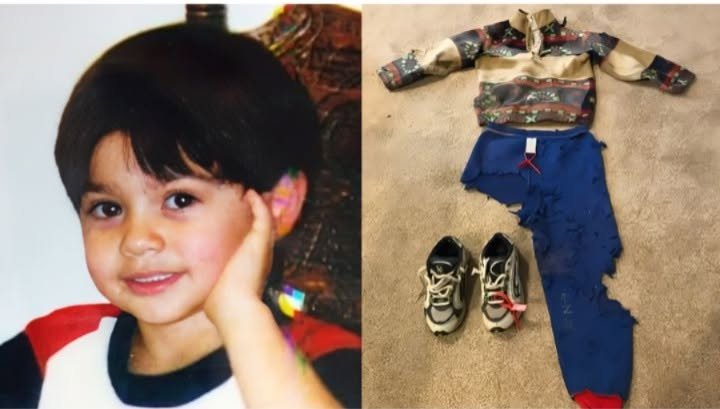

The Case of Matthew Pendergrast
Matthew Pendergrast was just two weeks away from his college graduation when he left his apartment around 7:30 am on Friday, December 1, 2000. Matthew, a Spanish major at Rhodes College in Memphis, Tennessee, climbed into his Toyota 4Runner and headed in the direction of his early morning Spanish class. His class was held just four blocks away from his apartment, but he never arrived there that morning. He called one of his friends in his hometown of Atlanta, Georgia, and left a voicemail for him later that morning, but it was the last time anyone ever heard from him. The 23-year-old never returned to his apartment and he was never seen again.
Around 2:00 pm Friday, Matt’s vehicle was found on a private dirt road in Lonoke County, Arkansas, nearly two hours away from Memphis. The road, which was located off Interstate 40, was used by local hunters to access the Bayou Meto swamp area. It was a group of duck hunters who discovered the vehicle, which was partially blocking the road. Matt had left the 4-Runner unlocked with the keys in the ignition and his backpack on the seat.
The duck hunters could see that the keys to the 4-Runner were in its ignition, and they wanted to move it so it wasn’t blocking the road. After going through the glove compartment, they found a receipt for a recent oil change on the vehicle; it had Matt’s name and home phone number on it. They called Matt’s parents’ house and asked to speak to him, then explained why they were calling. Jeff and Mary Ellen Pendergrast were unaware of any reason for their son to be in Lonoke County; as far as they knew, he didn’t have any friends or associates in that area. They called the police and reported their son missing.
Investigators with the Lonoke County Sheriff’s Office used a helicopter to search the area surrounding where Matt’s car had been found. From the air, they spotted a pile of clothing in a swampy area not far from where the car was parked. Lonoke County Lt. Frank Sturdivant said that the clothing belonged to Matt. “It was all there…sweatshirt, pants, socks, underwear…it looked like he just stood right there and undressed. I’ve been in this job for 25 years and this is one of the most bizarre things I’ve seen.” The clothing was neatly folded and placed in a pile on the wet ground.
Matt’s wallet and other personal items were found in the pockets of his pants; investigators found $46 in cash and several credit cards in his wallet. Lt. Sturdivant noted, “Based on the identification items we found, we have to assume he did make it to Arkansas, but that’s just speculation.” There were no signs of a struggle in or around Matt’s vehicle, and it appeared that he had voluntarily driven to the area.
After finding Matt’s clothes, investigators spent two days scouring the area for any sign of the missing student. They combed through hundreds of acres, including swampland, ponds, and flooded rice fields. Searchers used tracking dogs, helicopters with night vision equipment, and boats equipped with sonar. They found nothing to indicate Matt was in the area.
Since Matt had been living in Memphis, the Memphis Police Department also opened a missing person investigation. They searched Matt’s Memphis apartment but found nothing to indicate that he planned to skip class or go on any kind of trip. Memphis Police Lt. David Booker noted, “It’s possible he’s here or he could be there [in Arkansas]. We don’t rule anything out…we’re continuing to look.”
Geo Presley-Brooks, one of Matt’s friends in Atlanta, was one of the last people to speak with Matt before he disappeared. Matt had called him on Thursday night; Geo said he was very upbeat at the time. The two had chatted about Matt’s upcoming senior paper presentation; although Matt had sounded somewhat stressed about the work he needed to get done before graduation but not to a great extent. Geo had missed a call from Matt on Friday morning; Matt had left him a voicemail but just said he would be spending the weekend studying.
The physical search in Arkansas was called off Monday night. Lonoke County Sheriff Charlie Martin admitted that he didn’t have any idea what had happened to Matt. “There’s nothing to say that foul play has occurred and nothing to say foul play hasn’t occurred.”
By Tuesday, detectives had been unable to find any clues to Matt’s whereabouts but were beginning to think that he was no longer in Arkansas. Lt. Sturdivant noted, “At this point, we’re not ruling anything out…right now we’re running down the leads that we received this morning, which will probably take us out of our jurisdiction area.”
On Friday, investigators returned to the Arkansas swampland where Matt’s 4-Runner had been found. Although the area had already been extensively searched, the water levels had receded by the end of the week and detectives wanted to make sure that nothing had been missed. Divers from the Arkansas Fish and Game Commission were in the process of combing through the bayou while canine teams scoured the fields and woods surrounding the wetland.
While search teams were out looking for Matt, detectives were going through all of the belongings he had left in his vehicle, hoping that something would provide a clue as to what had happened to him. Investigators also continued interviewing Matt’s relatives, friends, and classmates.
Detectives were especially interested in Matt’s journal, which was found in the backpack he left inside the 4-Runner. The journal contained a lot of poetry about things like nature and life, but it was an entry called “The Silver Elves” that intrigued investigators the most. They found a website that described the concept of The Silver Elves as a way of obtaining immortality by “walking into water and becoming one with nature again.”
Carol Pate, a psychic from Little Rock, Arkansas, told police that she believed Matt was trying to be reborn as a Silver Elf. “I believe he felt he was in a battle for his soul, that he was battling demons and he lost.” Detectives, however, found nothing to indicate Matt was familiar with the website about Silver Elves, and there was nothing to suggest he was on a quest to obtain immortality. His use of the term “Silver Elves” in his journal may have been entirely coincidental and unrelated to the website. He had written dozens of poems and only one referenced Silver Elves; none of his poetry suggested he was suicidal.
Matt grew up in Atlanta, Georgia, where his father had a plastic surgery practice. He graduated from the Westminster School, a prestigious private school in the upscale Buckhead neighborhood. He was a popular student with many friends; he was a member of the school’s cross-country and soccer teams and played drums in the school band. After his high school graduation, he enrolled at Rhodes College, a small liberal arts college. He initially intended to go to medical school but fell in love with the Spanish language after a trip to Mexico and decided to change his major.
Justin Lennon, who was in the Kappa Sigma fraternity with Matt at Rhodes College, said he was mystified by his sudden disappearance. He noted that Matt had never given any indication that he was suicidal; he had been looking forward to his college graduation and starting his adult life.
Matt’s younger sister, Diana Pendergrast, had no idea what might have happened to her brother. “I can’t imagine him going off and not telling anyone. He wouldn’t want to worry his family.” She said that Matt had spent the past two summers doing volunteer work at an orphanage in the Dominican Republic, and he had returned a few months ago after spending a year studying abroad in Granada, Spain. He was hoping to work with a nonprofit group after graduating, and he had plans to go on a trip to the Caribbean shortly after his graduation ceremony.
Many of Matt’s college friends had graduated the previous May; he had felt somewhat lonely when he returned from Spain and still had one semester left before he would have enough credits to graduate. He kept in touch with many of them over email, however, and he hadn’t shown any signs of depression in the months leading up to his disappearance.
Matt was in a long-distance relationship with a woman he had met when he was in the Dominican Republic. Diana said she thought they might have had some difficulty dealing with distance but they emailed each other frequently and seemed committed to making it work. Matt didn’t have any immediate plans to return to the Dominican Republic; he had agreed to move in with one of his friends in Atlanta after his graduation.
The Arkansas State Police joined the search for Matt, assisting the Lonoke County Sheriff’s Office as they continued to comb through the area where the 4-Runner had been found. Investigators admitted that they were baffled by Matt’s disappearance. Arkansas State Police Sgt. Paul Curtis noted, “We found nothing in the vehicle that would indicate foul play but until we find him one way or the other, it’s difficult to say.”
Sgt. Curtis said he wasn’t sure if Matt was still in Arkansas or not; he also had no idea if Matt was still alive. “As you know, the human will to survive is pretty strong. It’s possible to survive out there. Is it probable without clothing? Probably not.”
Several of Matt’s friends traveled to Arkansas and waited anxiously for any word from the search teams as they combed through the area that Friday, exactly one week after Matt went missing. Jason Leawoods told reporters that everyone liked Matt. “He’s just not the kind of guy anyone would hate or want to hurt.” Geo wondered if things would have turned out differently if he had been able to take Matt’s call the morning he vanished. “He had no reason to even be in Arkansas.”
By Monday night, the search teams decided to suspend the search once again. They had scoured the area without finding any trace of Matt and weren’t sure if he was in the area or not. Lt. Sturdivant told reporters that state wildlife officers would continue to survey the bayou by boat a couple of times a week to see if any additional evidence surfaced.
On December 19, 2000, Matt’s parents announced that they were offering a $5,000 reward for information leading to their son’s location. His mother, Mary Ellen, said she wanted nothing more than to have Matt home in time for Christmas. “We really believe someone knows something that would help us find Matt. We’re just in the midst of wondering what in the world happened. It’s a major crisis.”
Matt had last visited his parents over the Thanksgiving holiday and had planned to return to Atlanta after his finals were finished the week after he vanished. He had been in a good mood when he last returned home and had been excited about his plans for the future. Mary Ellen noted, “He had decided that he wanted to spend his life helping kids in underdeveloped countries.”
Sgt. Curtis admitted that he still wasn’t sure if any crime had been committed. “It’s kind of a strange case…we have a missing person. [But] he’s an adult. I guess if he wants to leave his clothes and his vehicle by the side of the road, it’s up to him.”
State wildlife officers were continuing to conduct sporadic searches of the Lonoke County waterways but they hadn’t found any trace of Matt. Sgt. Curtis was confident that he would eventually be found if he had ended up in the water. “If a person’s in the water, they’ll eventually float to the surface.”
Weeks went by without any progress on the case. On January 25, 2001, Lonoke County officials conducted another search of the area surrounding where Matt’s 4-Runner had been found. While search teams scoured the fields and waterways for any sign of the missing student, a helicopter surveyed the area from above. They found nothing.
On January 26, 2001, Matt’s family announced that they were doubling the amount of the reward they were offering for information. They were willing to pay $10,000 to anyone who could tell them where their son was located. Sadly, investigators received few tips about Matt’s case and it slowly started to go cold.
In June 2001, investigators conducted several more physical searches for Matt. They expanded their search area deeper into the Bayou Meto, using boats and a helicopter to cover more ground. This new search took them much further away from the area where Matt had left his vehicle, but detectives said it was conceivable that he could have made it that far so they wanted to make sure it was thoroughly searched. They didn’t find any clues to Matt’s whereabouts.
By July 2001, Matt had been missing for seven months and his parents had no idea if he was alive or dead. Every night, they made sure to light a candle and place it in their front window, a symbolic gesture to help guide Matt home. Mary Ellen was still baffled by the situation and had no idea why Matt had ended up in Arkansas on a day when he was supposed to be in class. “Why would he turn off there? There was nothing to attract him, not even a fast food place. It made me think Matt did not do this on his own.”
Years went by, and both detectives and Matt’s loved ones came to the conclusion that he was most likely dead, though they admit they have no idea how it happened. The way Matt’s clothing was found led his parents to believe that he wasn’t the person who put the items there. Mary Ellen noted, “Our son was not the neatest soul in the world. He would not have folded up those clothes and left them in a stack.”
Jim Kulesa, one of the Lonoke County investigators that originally worked on the case, agreed that the scene was odd. “In my opinion, I believe the whole area was staged. But by who? That’s the question.” He considered the possibility that Matt had been involved in drugs or another high-risk activity that got him killed but soon discarded that theory. He found nothing in his background to suggest that he had ever participated in any illegal activity.
Neither Jim Kulesa nor Matt’s parents believed that Matt was a likely candidate for suicide, either. He had been so excited about his future; he had been doing well in all his classes and was on track to graduate just two weeks after he vanished. Detectives, as well as Jeff and Mary Ellen, think that Matt may have been carjacked in Memphis after he left his apartment to go to class.
Jim Kulesa told reporters that he had questioned several people and had asked one individual to take a polygraph examination, but the man had refused. Detectives still have no idea exactly what took place on the day Matt disappeared. “As far as evidence goes, there’s really nothing to pinpoint what happened to him.”
By 2015, Jeff and Mary Ellen had resigned themselves to the fact that they were never going to see their only son again, but they still wanted answers. Mary Ellen admitted, “There’s no such thing as closure, but we would love to know for sure that he’s dead. We’ve never had a memorial service for him, and just to be able to do that would be very healing.”
Matthew David Pendergrast was just 23 years old when he went missing from Memphis, Tennessee in December 2000; his vehicle was later found in Lonoke County, Arkansas. It’s unclear exactly what happened on the day Matt went missing, but investigators and Matt’s family believe he was likely a victim of foul play. Matt has blue eyes and brown hair, and at the time of his disappearance, he was 5 feet 6 inches tall and weighed 110 pounds. Matt was likely wearing a black cord necklace with a blue crystal pendant when he went missing, and he has facial dimples when he smiles. If you have any information about Matt, please contact the Lonoke County Sheriff’s Office at 501–676–6494 or the Arkansas State Police at 800–553–3820.